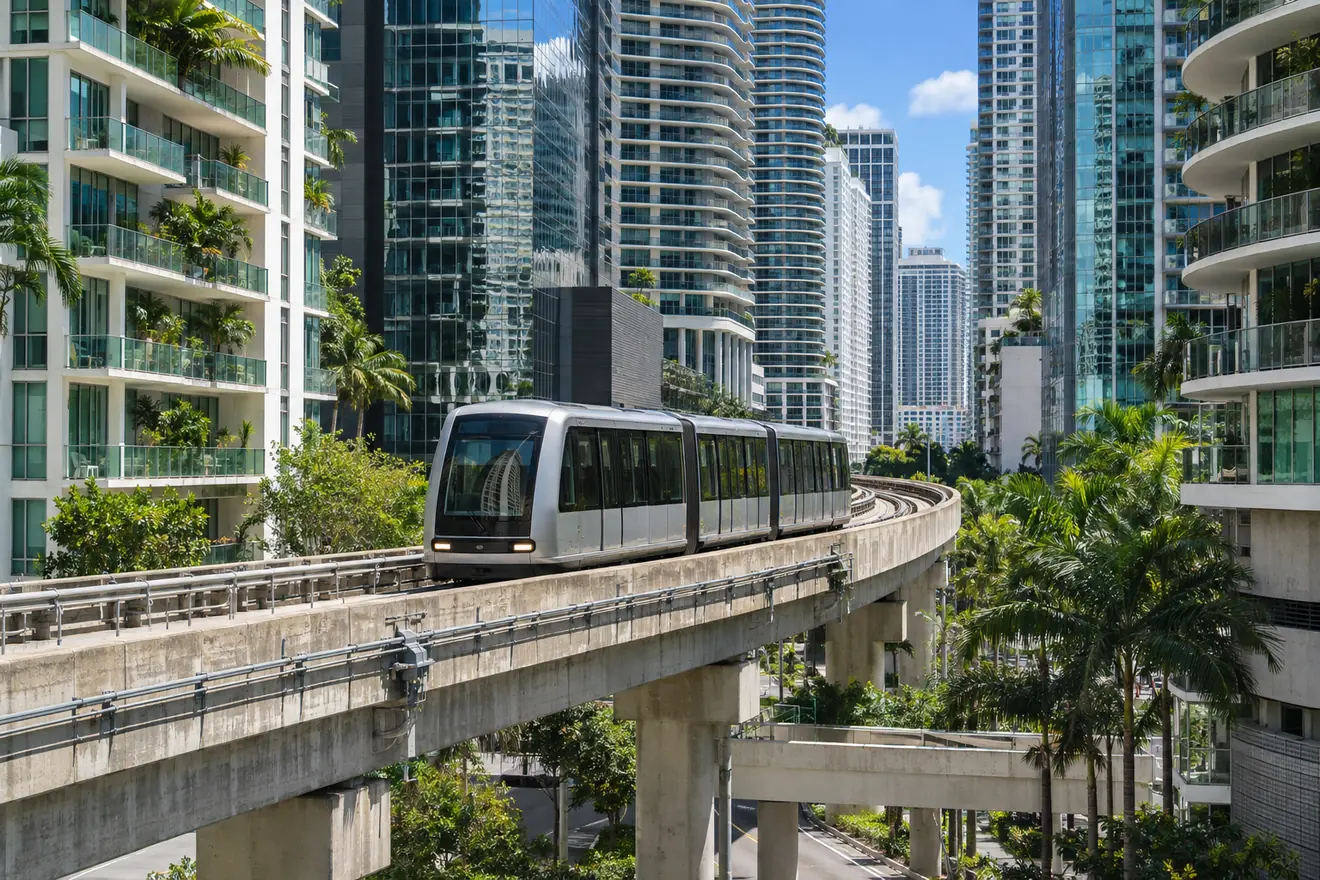
Living in Brickell means living in Miami's high-rise financial and residential district, a dense strip of condominium and rental towers just south of the Miami River and Downtown Miami, along Biscayne Bay. It suits people who want to walk to restaurants and offices, use Metrorail and Metromover instead of a car, and accept construction, crowds and building-by-building differences in fees and rules. Brickell is a neighborhood of the city of Miami, not a separate municipality. For buyers, the questions that matter most are building age and condition, association finances, short-term rental rules, noise and traffic, and, for newer projects, how pre-construction contracts and deposits work.
Brickell neighborhood, Miami: boundaries and character
According to the Brickell article on Wikipedia, the district runs along Biscayne Bay from Interstate 95 on the west to the Rickenbacker Causeway (SW 26th Road) on the south. Brickell Avenue forms the spine, lined with towers, banks and consulates. Behind it, the streets around Mary Brickell Village (opened in 2006) and Brickell City Centre hold restaurants, shops and nightlife. Simpson Park Hammock, a small preserved natural area at South Miami Avenue and Broadway, is one of the few green spaces inside the district, and the Biscayne Bay shoreline offers walkways in several places.
The area is busy on weekdays with office workers and busy again at night with diners. Residents often describe a young, international, professional mix, and many units are owned by investors or used as second homes. That mix matters for how association rules, rental policies and building culture develop.
Brickell Key: the island next door
Brickell Key is a small man-made island connected to Brickell by a bridge. It is a separate residential enclave with its own cluster of condominium and hotel towers, and bay-front paths. Island condominiums have their own association structures, so fees, rules and reserves should be reviewed building by building. The trade-off is separation from the mainland: Metrorail and the offices of Brickell Avenue are across the bridge, so check the walking or Metromover route to the places you would use daily.
Brickell Miami condos: housing types you will encounter
- High-rise condominiums. The majority of owner-occupied housing, from early 2000s towers to recent completions, with large amenity decks.
- Rental towers. Many buildings are operated entirely as rentals, which is relevant if you are comparing neighborhoods rather than buying.
- Older low-rise buildings. A few mid-century and older properties remain in the area, often with different fee structures.
- Brickell Key towers. Island condominiums with bay views and their own association structures.
- Pre-construction towers. New projects marketed before completion, subject to developer disclosures and escrow rules.
Because building age drives reserves, insurance and inspection requirements, an early-2000s tower and a new completion can feel like different markets even a few blocks apart. Prices, fees and rents vary widely by building and change often, so compare current listings and each building's budget rather than relying on a neighborhood average.
Getting around: can you live in Brickell without a car?
Yes, many residents do. Brickell is among the few places in South Florida where daily life without a car is realistic. The Brickell Metrorail station (at SW 11th Street and 1st Avenue) and the Metromover loops connect the district with Downtown Miami and the rest of the rail network, and Brightline's MiamiCentral station is a short Metromover ride away. Walking between restaurants, offices and parks is common.
- Metromover. Miami-Dade County describes it as a free elevated people mover with three loops: Inner, Omni and Brickell. As of November 2026 the county lists service from 5:30 a.m. to 10 p.m., seven days a week, and notes temporary station closures from time to time, so check the county page before relying on it late at night.
- Metrorail. The county lists a standard fare of $2.25 as of November 2026, with trains running from 5 a.m. to midnight, seven days a week.
- Driving. Traffic can be slow at rush hour, and the Brickell Avenue bridge over the Miami River is a drawbridge that can delay traffic when it opens. Parking in buildings is typically a separate cost.
- Rideshare and bikes. Widely used, especially late in the evening when Metromover is not running.
Schools and public services, in general terms
Public schools are administered by Miami-Dade County Public Schools, so attendance zones should be confirmed with the district. The city of Miami provides police and fire-rescue, and many buildings add private security and concierge services through their associations. Because the district is dense, noise, construction and event traffic are part of everyday life.
Things to check before buying
| Item | What to look for |
|---|---|
| Association finances | Review the budget, reserve study, any building loans and the share of owners who are behind on fees. |
| Milestone inspection and reserve study | Required for covered buildings under Florida law. Read the reports and see the condo guide. |
| Short-term rentals | Many buildings prohibit rentals under a set minimum term. Read the declaration. |
| Flood and wind insurance | Check the flood zone and the master policy. See the flood guide. |
| Parking and storage | Confirm whether spaces are deeded, assigned or leased, and what they cost. |
| Pre-construction | Understand deposit escrow, delivery deadlines and what happens if the project is delayed. Ask a Florida attorney to review. |
If the unit will be your permanent residence, the Florida homestead exemption guide explains who qualifies for the property tax benefit and how to file.
Living in Brickell vs Miami Beach
The short version: Brickell is an urban, car-optional business district on the mainland, while Miami Beach is a barrier island with beach access, a resort-and-nightlife core in South Beach and quieter residential pockets farther north. Brickell offers transit connections to the rail network and offices within walking distance; the beach is not part of daily life. Miami Beach trades that for sand and a more varied range of neighborhoods, with more reliance on buses, rideshare or a car. Read the Miami Beach neighborhoods guide to see how its areas differ, and test the commute you would actually make before choosing between them.
Comparing with nearby areas
Immediately north, Downtown Miami shares transit access but has a more mixed civic and cultural character. South of Brickell, Coconut Grove is much lower in scale, with tree-covered streets and a village feel. For a county-level view on how Miami-Dade compares with Palm Beach County, read the county comparison.
Daily life and trade-offs
Brickell rewards people who like energy and convenience and who can tolerate construction, sirens and crowds. Grocery stores, gyms, restaurants and offices are close, and the bay is minutes away. The trade-offs are limited green space, high parking costs, packed sidewalks at lunch and on weekend nights, and elevator waits in large buildings. Heavy rain can flood low street corners quickly. Before choosing a building, walk the block at rush hour and again late on a Friday, and ask residents how long deliveries, repairs and move-ins take.
This guide is independent general information. It does not describe any particular building or sale, and rules change. Verify details with the city, county and licensed professionals.
Frequently Asked Questions
Is Brickell its own city?
No. It is a neighborhood within the city of Miami, in Miami-Dade County.
Can I live in Brickell without a car?
Many residents do, using Metrorail, Metromover, walking and rideshare. Metromover is free, but its listed hours end at 10 p.m. as of November 2026, so late-night trips often need rideshare. Needs vary, so test your daily routes before deciding.
What is Brickell Key?
A small man-made island connected to Brickell by a bridge, with its own cluster of residential and hotel towers.
Is Brickell better than Miami Beach?
It depends on what you want daily. Brickell is a walkable, transit-served business district on the mainland; Miami Beach offers the beach and a wider range of residential areas but less rail access. Compare commute, noise and building rules for the specific addresses you are considering.
Are short-term rentals allowed in Brickell condos?
It depends on each building's rules and city zoning. Many buildings prohibit short stays, so check the declaration before buying.
What should I ask about a new tower?
Ask about deposit escrow, completion deadlines, developer disclosures and the budget for the new association. Get legal review of the contract.